Of course! Here is a 1800-word SEO article crafted to your specifications.
Industrial Automation – Basics & Importance
Let’s be honest. The words “industrial automation” can sound intimidating, like something reserved for engineers in lab coats and giant factories that stretch for miles. You might be thinking, “This doesn’t apply to my business,” or “The cost must be astronomical.” But what if we told you that automation is probably already part of your operation, and embracing it fully is the single best way to stop fighting daily fires and start scaling your profits?
We’re going to break down this seemingly complex topic into bite-sized, digestible pieces. No jargon-filled lectures, we promise. Just a clear, honest look at how letting machines handle the heavy lifting can revolutionize your business, whether you’re running a massive production line or a bustling restaurant in Wheaton.
What Exactly Is Industrial Automation, Anyway?
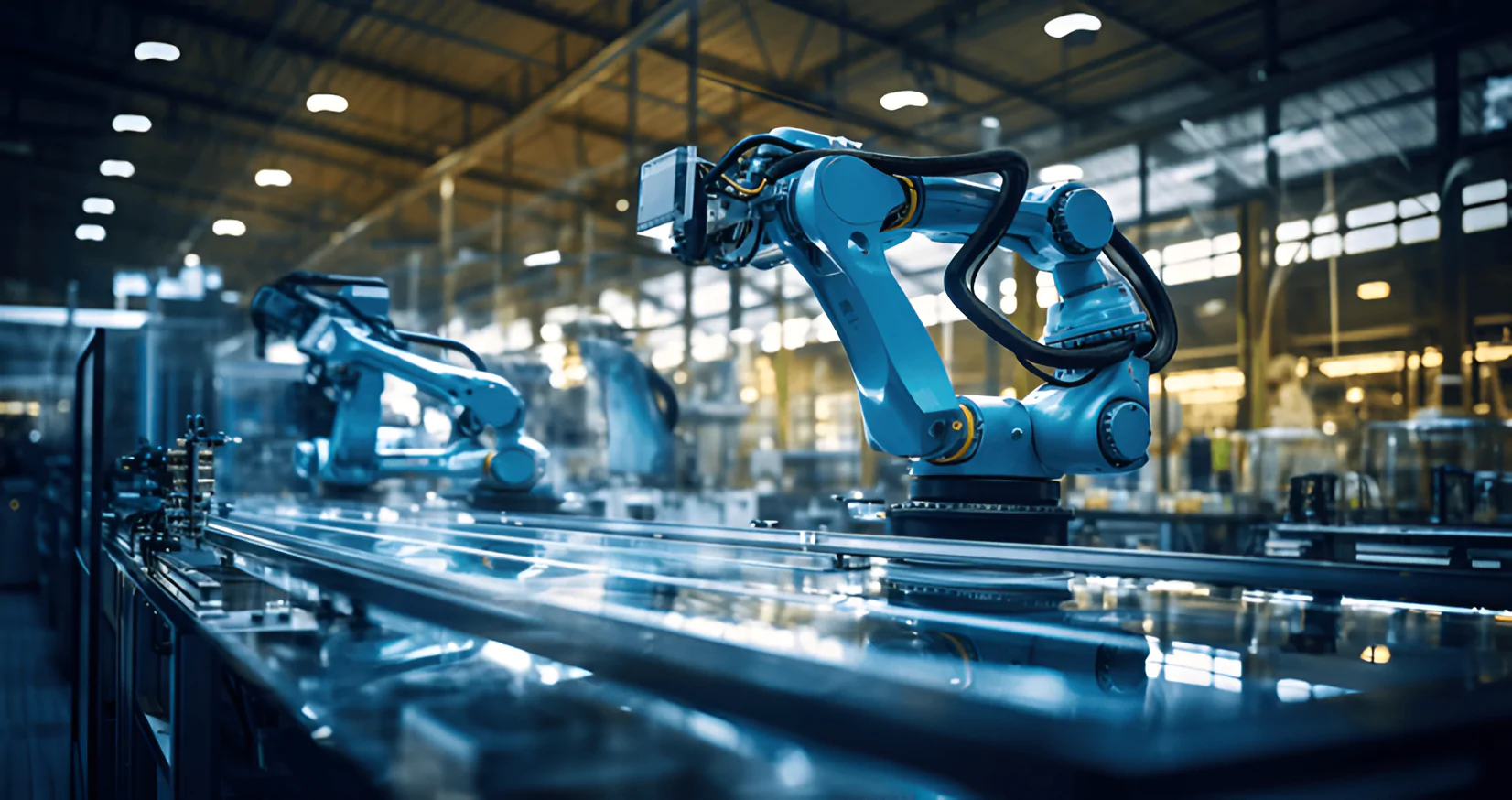
In the simplest terms, industrial automation is the use of technology and automatic control systems to operate industrial machinery and processes with minimal human input. Think of it as putting your operations on a reliable, predictable autopilot.
We’re not necessarily talking about a fleet of humanoid robots (though that’s cool, too). Often, it’s about smarter control systems. For instance, a commercial walk-in cooler that automatically adjusts its temperature based on the load inside and the time of day is a form of automation. It’s making decisions without someone manually turning a dial.
The goal isn’t to replace people, but to free them up. We free up our teams from repetitive, monotonous, or even dangerous tasks. This allows them to focus on what humans do best: problem-solving, innovation, quality control, and customer service. It’s about working smarter, not harder.
Why Bother? The Unbeatable Benefits of Automating
So, why is everyone moving in this direction? The benefits aren’t just nice-to-haves; they’re game-changers for staying competitive. Let’s look at the big ones.
Skyrocketing Productivity and Consistency
Machines don’t get tired. They don’t need coffee breaks, and they certainly don’t have off days. An automated system can run 24/7, churning out products or maintaining conditions with relentless efficiency.
More importantly, they deliver unwavering consistency. A machine will perform the same task the exact same way, ten thousand times in a row. This drastically reduces human error and ensures every single product that leaves your facility meets the same high standard. Say goodbye to costly variations in quality.
Slashing Costs and Boosting Safety
This is the part that really gets a business owner’s attention. Automation directly attacks operational costs.
- Reduced Labor Costs: While it shifts the nature of jobs, it reduces the need for manual labor on specific, repetitive tasks.
- Lower Operational Costs: Automated systems are incredibly efficient with materials and energy. An automated HVAC or commercial refrigeration system, for example, can optimize its run cycles to minimize power consumption.
- Fewer Errors & Rework: Consistent quality means you waste less material on defective products.
- Enhanced Safety: We can assign dangerous tasks—like working in extreme temperatures or handling heavy machinery—to automated systems. This protects our most valuable asset: our people.
Unmatched Data and Visibility
Modern automation isn’t blind. It’s packed with sensors and data collection points. This gives us incredible visibility into our operations. We can track efficiency, pinpoint bottlenecks, predict maintenance needs, and monitor energy usage in real-time. This data is pure gold for making smart, strategic business decisions.
The Nuts and Bolts: Key Components of an Automated System
Every automated system, from a simple timer to a complex AI-driven production line, relies on a few key players working in harmony.
The Brain: PLCs (Programmable Logic Controllers)
Think of the PLC as the unwavering brain of the operation. This rugged little computer constantly monitors inputs from sensors (e.g., “Is the conveyor belt running?” “Is the temperature too high?”) and makes logic-based decisions to control outputs (e.g., “Start the motor,” “Sound the alarm,” “Adjust the coolant valve”). It’s the workhorse that executes the control program without fail.
The Face: HMIs (Human-Machine Interfaces)
This is how we, the humans, talk to the brain. The HMI is the touchscreen or control panel where we can see what’s happening, adjust setpoints, and receive alerts. A well-designed HMI turns a complex web of machinery into simple, intuitive commands and visuals.
The Muscle: Drives and Motors
If the PLC is the brain, the drives and motors are the muscles. Drives precisely control the speed, torque, and direction of motors. They bring the physical movement to life, whether it’s driving a conveyor, pumping a liquid, or positioning a robotic arm with perfect accuracy.
The Senses: Sensors and Instruments
A brain is useless without senses. Sensors are the eyes and ears of the system. They measure critical variables like temperature, pressure, flow, level, and proximity. In the context of commercial refrigeration service, a faulty temperature sensor can mean the difference between perfectly preserved food and a massive, costly spoilage event.
The Unsung Hero: Industrial Refrigeration in the Automated World
Now, let’s get specific. For many businesses in the food, beverage, and pharmaceutical sectors, industrial refrigeration isn’t just a convenience; it’s the backbone of the entire operation. And guess what? It has been revolutionized by automation.
A modern walk in cooler is far from a simple, cold box. It’s a finely tuned environment managed by automated controls that:
- Precisely regulate temperature and humidity to preserve product integrity.
- Initiate automatic defrost cycles to maintain peak efficiency.
- Monitor for faults and send immediate alerts to technicians before a minor issue becomes a catastrophic failure.
When this system breaks down, it’s not a minor inconvenience. It’s a business emergency. That’s why having a reliable partner for commercial refrigeration repair is non-negotiable. For businesses in Washington, Arlington, Silver Spring, and Wheaton, that partner is Pavel Refrigerant Services.
Based in Montgomery County, we understand the critical nature of your cold chain. We don’t just fix broken components; we provide comprehensive commercial refrigeration maintenance to prevent breakdowns. Our restaurant refrigeration repair services are fast, effective, and designed to minimize your downtime, because we know every minute your commercial freezer is down, you’re losing money and product.
Meet Our Tech Arm: Protech Automation
While Pavel Refrigerant Services keeps your critical environments running, our sister division, Protech Automation, focuses on the bigger picture of your productivity. We are the architects of efficiency, providing the hardware and intelligence to make your entire operation smarter.
At Protech Automation, we supply and integrate the very components we just discussed:
- Industrial-Grade PLCs & HMIs: The reliable brains and user-friendly faces for your control systems.
- Precision Drives & Motors: The muscle to move your processes with efficiency and accuracy.
- Advanced Sensors & Instruments: The sensory network that feeds critical data to your controllers.
But we go beyond just selling parts. Our automation services include system design, programming, installation, and ongoing support. And now, we’re pushing the boundaries with AI-based solutions that analyze your operational data to predict failures, optimize energy consumption, and uncover hidden inefficiencies. We’re not just fixing machines; we’re revolutionizing how industries operate.
Making the Choice: Levels of Industrial Automation
Not every business needs a lights-out, fully autonomous factory. Automation exists on a spectrum. This table helps you understand where you might fit in and what the next step could be.
| Level of Automation | What It Means | Best For… | Example |
|---|---|---|---|
| Basic / Fixed | Hardwired logic for a single, repetitive task. Difficult to change. | Simple, high-volume production with no product variation. | A dedicated bottling or stamping machine. |
| Programmable | Uses PLCs and controllers that can be reprogrammed for different product batches. | Batch manufacturing (e.g., food, pharmaceuticals). | A production line that makes different sauces on different days. |
| Flexible/Integrated | Multiple systems work together, guided by a central computer. Easily adaptable. | Complex assembly with frequent product changeovers. | An automotive assembly line that can build different car models. |
| Full (Lights-Out) | The entire process runs without human intervention on the production floor. | Industries where precision and cost-control are paramount, and the environment is challenging for humans. | Certain semiconductor fabrication plants. |
Let’s Talk About the Elephant in the Room: Cost and Implementation
We know what you’re thinking: “This all sounds great, but what’s the price tag?” IMO, the better question is, “What is the cost of not automating?”
Yes, there is an upfront investment. But when you factor in the long-term savings from reduced labor, lower waste, better energy efficiency, and higher output, the return on investment (ROI) becomes clear. A single avoided commercial fridge repair crisis or a major product spoilage can often justify the cost of a more reliable, automated system.
The key is to start with a clear audit of your process. Identify your biggest pain point—is it quality control? Energy bills? Downtime? Then, we can implement a targeted, scalable solution that delivers a fast ROI, rather than trying to boil the ocean all at once.
Frequently Asked Questions (FAQs)
1. Won’t automation just put my employees out of work?
This is the most common concern, and we get it. However, the reality is that automation typically transforms jobs rather than eliminates them. It takes over dull, dirty, and dangerous tasks, allowing your team to upskill into more rewarding roles like system monitoring, maintenance, programming, and data analysis. It makes your business more profitable and stable, which ultimately protects and creates better jobs.
2. How do I find a reliable service providernear mefor automation or refrigeration?
Look for a provider with a proven track record, relevant certifications, and a broad range of services. They should offer everything from emergency walk in refrigerator repair to strategic automation planning. They should be local enough to respond quickly (like Pavel Refrigerant Services is for the DMV area) and have the technical depth to handle complex projects (like Protech Automation). Check their reviews and ask for case studies!
3. My equipment is old. Can it be automated, or do I need to replace everything?
Great news! In many cases, we can retrofit modern automation controls onto existing equipment. By upgrading the PLC, HMI, and sensors, we can breathe new life into an older machine, dramatically improving its performance, efficiency, and data capabilities without the capital expense of a full replacement. It’s one of the most cost-effective ways to start your automation journey.
The Bottom Line: Your Future is Automated
We’ve covered a lot of ground, from the basic components like PLCs to the critical importance of reliable industrial refrigeration repair. The message is simple: industrial automation is no longer a luxury for giant corporations. It’s a practical, accessible, and powerful tool for businesses of all sizes to increase quality, safety, and profitability.
It’s about building a business that is resilient, efficient, and ready for the future.
So, whether you’re battling constant temperature fluctuations in your walk in cooler or you’re ready to explore how AI-based solutions can transform your production line, the time to act is now.
Don’t just run your business. Optimize it. Contact the experts at Pavel Refrigerant Services for all your critical cooling needs and let Protech Automation engineer your competitive advantage.
Let’s build a smarter, more profitable future for your business, together. After all, who has time to fight yesterday’s battles when you can be winning tomorrow’s war?